
Frontend Development Course at NTITS Institute: Learn Modern Web Development and Build a Career in Tech
The demand for skilled web developers continues to grow as businesses increasingly depend on websites and web applications to connect with customers. For students, graduates, and aspiring IT professionals, learning frontend development can be an excellent starting point for building a career in technology.
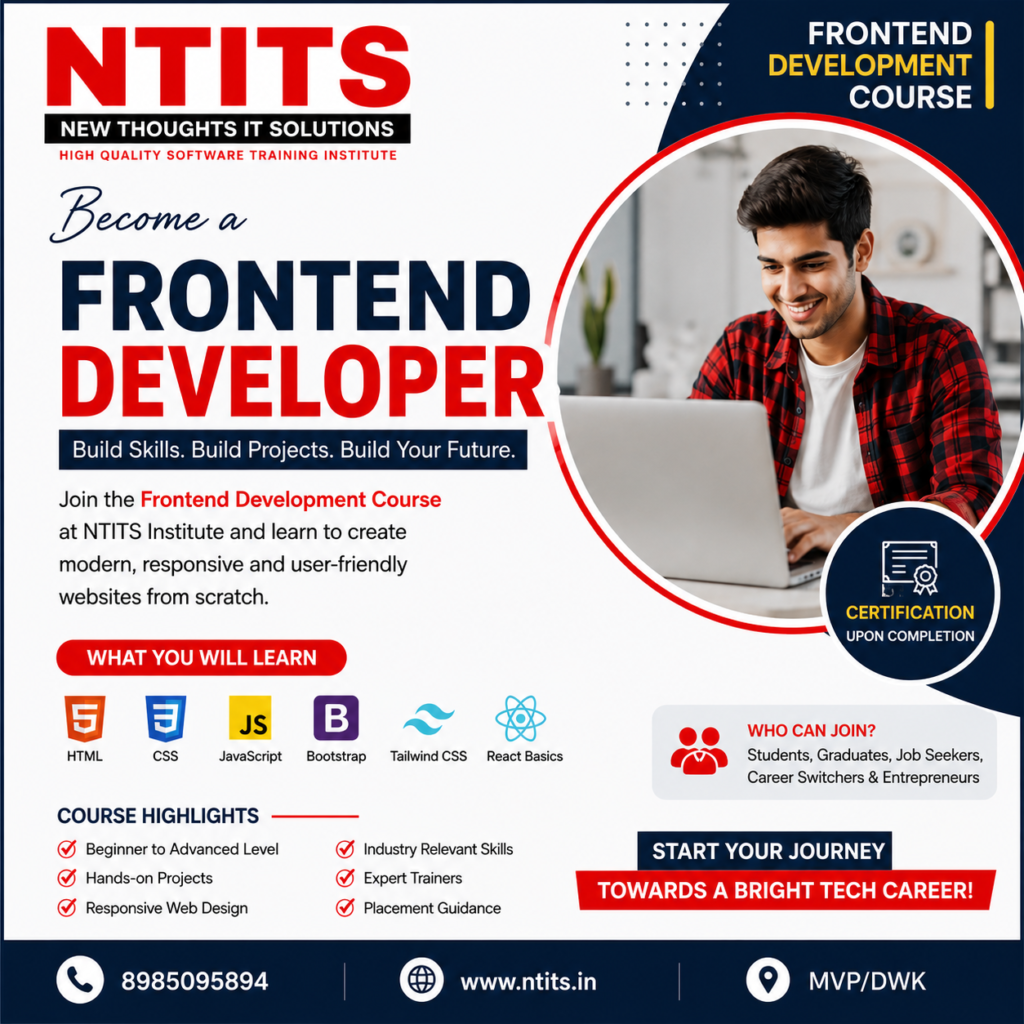
The Frontend Development Course at NTITS Institute is designed to help learners understand the fundamentals of web development and gradually build the practical skills required to create modern, responsive, and user-friendly websites.
From HTML and CSS to JavaScript and modern frontend technologies, learners can develop their knowledge through structured training and practical projects.
What Is Frontend Development?
Frontend development is the part of web development focused on everything users see and interact with on a website or web application.
A frontend developer typically works with technologies such as:
- HTML
- CSS
- JavaScript
- Responsive web design
- UI development
- Modern JavaScript frameworks and libraries
- Version control tools
- Web development tools
Learning these technologies enables students to transform designs and ideas into functional, interactive websites.
Why Learn Frontend Development?
A strong foundation in frontend development can open the door to several opportunities in the IT industry.
1. Beginner-Friendly Career Path
Frontend development can be a suitable starting point for students and beginners who want to enter the software and web development industry.
2. Build Real Websites
Instead of learning only theory, students can practice creating webpages, landing pages, responsive websites, and interactive web applications.
3. Develop In-Demand Technical Skills
HTML, CSS, JavaScript, responsive design, and modern frontend technologies are important skills for web development.
4. Create a Strong Portfolio
Practical projects can help learners demonstrate their skills to potential employers and clients.
What Will You Learn in the NTITS Frontend Development Course?
The course can be presented around a practical learning journey:
HTML Fundamentals
CSS and Web Design
JavaScript
Responsive Web Development
Modern Frontend Technologies
Practical Projects
Who Can Join a Frontend Development Course?
A frontend development course can be suitable for:
- College students
- Recent graduates
- Beginners interested in coding
- Job seekers
- Aspiring web developers
- Career switchers
- Freelancers
- Entrepreneurs who want to understand web development
Prior professional programming experience is not necessarily required for a beginner-level course.
Career Opportunities After Frontend Development Training
After developing a strong foundation and building practical projects, learners can explore opportunities such as:
Frontend Developer:
Build and maintain the user-facing parts of websites and web applications.
Web Developer:
Develop websites using frontend and potentially backend technologies.
UI Developer:
Convert user interface designs into functional web interfaces.
JavaScript Developer:
Build interactive web applications using JavaScript and related technologies.
Freelance Web Developer:
Create websites and web solutions for individual clients and businesses.
Why Choose NTITS Institute for Frontend Development Training?
When selecting a frontend development training institute, students should look beyond the course title and evaluate the learning experience.
Important factors include:
- Structured curriculum
- Experienced trainers
- Hands-on practice
- Real-world projects
- Industry-relevant technologies
- Doubt-clearing support
- Portfolio development
- Career guidance
- Practical assessments
NTITS Institute can position its frontend development program around these learner-focused benefits while highlighting its specific facilities, faculty expertise, course duration, placement support, and certification details where applicable.
How to Start Your Frontend Developer Career
Starting a career in frontend development is easier when learning follows a structured path:
Step 1: Learn HTML and website structure.
Step 2: Master CSS and responsive layouts.
Step 3: Learn JavaScript fundamentals.
Step 4: Practice DOM manipulation and APIs.
Step 5: Learn a modern frontend framework or library.
Step 6: Build real-world projects.
Step 7: Create a professional portfolio and resume.
Step 8: Apply for internships, junior roles, freelance projects, and entry-level opportunities.
Frequently Asked Questions
1. What is a Frontend Development Course?
A frontend development course teaches students how to create the visual and interactive parts of websites and web applications using technologies such as HTML, CSS, JavaScript, and modern frontend tools.
2. Is frontend development suitable for beginners?
Yes. Beginners can start with HTML and CSS before progressing to JavaScript and more advanced frontend technologies.
3. What technologies are taught in frontend development?
A typical frontend curriculum includes HTML, CSS, JavaScript, responsive web design, Git, APIs, and one or more modern frontend frameworks or libraries. Students should check the current NTITS course syllabus for the exact technologies covered.
4. Do I need programming experience to learn frontend development?
Not necessarily. Beginners can start with basic web technologies and gradually develop their programming skills.
5. Can I get a job after completing a frontend development course?
A course can provide foundational and practical skills, but employment depends on factors such as your technical ability, projects, portfolio, interview performance, and experience.